Ghost Stages and Secret Rooms: Your Field Guide to Uncovering the Coolest Venues Nobody's Talking About Yet
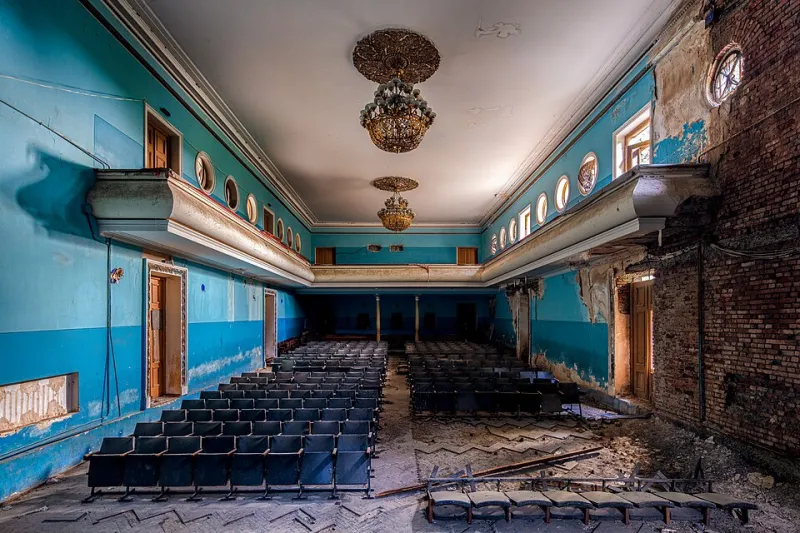
Photo: James Kerwin, CC BY 2.0, via Wikimedia Commons
Every city has two maps. There's the one your navigation app knows about — the ticketing giants, the sports arenas, the clubs with their names in neon. And then there's the other one. The map that lives in group chats and half-tagged Instagram stories, in the memories of the person who went to a show in a converted grain elevator in 2019 and still hasn't fully recovered from how good it was.
That second map is the one worth learning to read.
Unconventional venues — abandoned movie palaces, pop-up warehouse galleries, back-room listening bars, repurposed churches — are where a huge portion of the most genuinely exciting cultural programming in America is actually happening right now. The challenge isn't that these places don't exist in your city. The challenge is that finding them, vetting them, and getting there before the crowds do requires a slightly different approach than just checking the weekend listings.
Here's how to start building that skill set.
Start With the Building, Not the Event
Most people search for events first and stumble onto venues as a byproduct. Flip that. Start paying attention to the physical spaces themselves.
Old industrial neighborhoods, arts districts, and post-commercial corridors — the kind of blocks with shuttered storefronts and loading docks that nobody seems to own — are almost always incubating something. Walk them. Drive them. When you spot a building with fresh graffiti art on the outside but no obvious signage, that's a tell. So is a parking lot that's inexplicably full on a Thursday night.
Local historic preservation boards and city planning websites are genuinely underrated research tools here. They maintain public records of building permits, zoning variances, and change-of-use applications. When a former textile warehouse files for a temporary assembly permit, something is about to happen inside it. That filing is public information, and it usually shows up weeks before any event announcement does.
Decode the Social Media Trail
Hidden venues don't advertise the way traditional venues do, but they absolutely leave a digital trail — you just have to know what you're looking for.
Search Instagram and TikTok by location tags, not by account names. When a venue is just getting started, the people who attend its early events are often tagging the address or neighborhood rather than any official handle. Scroll through location-tagged content for neighborhoods you're curious about. If you see multiple posts from the same industrial address on the same night, someone threw an event there.
On Facebook, search for event listings filtered by city and then sorted by distance rather than popularity. The algorithm buries small-venue events. Sorting by distance instead of relevance surfaces programming that the platform would otherwise hide from you entirely.
Also worth following: local photographers, stylists, and musicians. These are the people who get invited to early-stage venues before any public announcement. Their tagged photos are essentially advance scouting reports.
Research the History Before You Go
Once you've identified an interesting space, spend twenty minutes on its history. This isn't just trivia — it actively improves your experience and helps you evaluate the programming.
Google the address combined with terms like "formerly," "used to be," or "history." Local alt-weekly archives (most cities have digitized their old alternative newspapers) are gold for this. A building that was once a jazz venue, a dance hall, or an art cinema carries that energy forward in ways that matter. Knowing you're watching an experimental music set in a space that hosted big band performances in the 1940s changes how the room feels.
City library websites often have photo archives and Sanborn fire insurance maps — old architectural documents that show exactly what every building in a neighborhood was originally built for. It sounds nerdy. It is a little nerdy. It also makes you the most interesting person at the event.
Signals That the Programming Is Actually Worth Your Time
Not every warehouse show is a hidden gem. Some are just loud rooms with bad sound and a cash-only bar. Learning to evaluate quality before you commit is part of the skill.
Look at who's curating, not just who's performing. When a pop-up gallery or an underground venue has a consistent curatorial voice — a specific aesthetic, a recognizable sensibility across multiple events — that's a sign someone is building something intentional. One-off events with random lineups are a coin flip. A series with a point of view is worth tracking.
Pay attention to how the event communicates. Venues doing serious work tend to write about what they're doing with some specificity. Vague hype language ("the best night of your life," "an experience you won't forget") is a yellow flag. Specific language about the art, the artists, or the concept is a green one.
Ask around. Bartenders at mid-level music venues, record store employees, and art supply shop staff are plugged into these networks in ways that are almost comically useful. A single good conversation at the right indie record shop has probably done more for people's underground venue knowledge than hours of online searching.
Build Your Own Running List
Once you start finding these spaces, keep track of them somewhere. A simple note on your phone with addresses, what you observed, and any events you heard about works fine. Over time, you'll start to see patterns — certain blocks that keep producing interesting things, certain organizers whose names keep showing up across multiple venues.
That's when the map starts to feel like yours. And that's when going out in your city starts to feel genuinely different — less like consuming entertainment and more like participating in something that's still being figured out.
The best venues in your city right now probably don't have a website. They might not even have a name yet. But they're there, and the people who find them early are the ones who end up with the best stories.