Opening Act, Closing the Gap: How Weeknight Warm-Up Slots Became a Local Artist's Best Friend
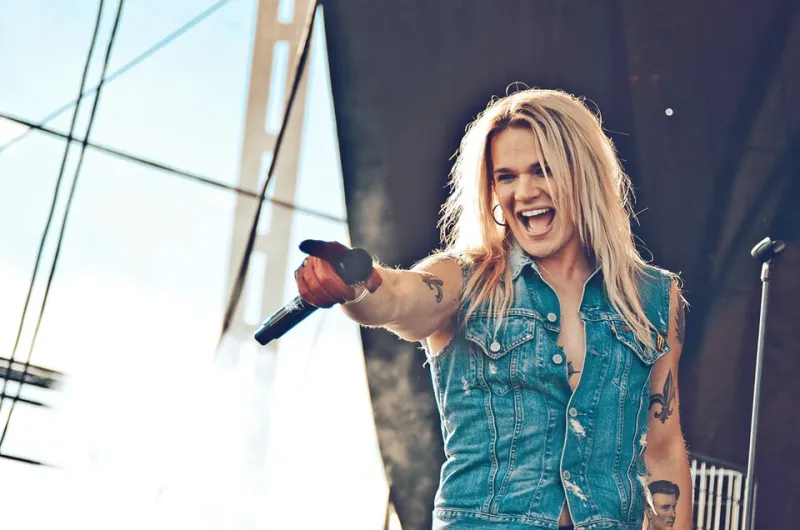
Photo: Elena Pavlova, CC BY-SA 2.0, via Wikimedia Commons
There's a moment every opener knows well. The house lights are still halfway up, the bartender is louder than the PA, and maybe forty people are scattered across a venue built for two hundred. You count the heads, take a breath, and play anyway.
For a long time, that scene was considered the bottom of the music food chain — something to survive on your way to something better. But talk to working musicians in cities like Nashville, Columbus, Portland, or Richmond right now, and a different story starts to emerge. The weeknight opener slot, long dismissed as thankless and low-stakes, has become one of the most effective tools a developing artist has. And the people who figured that out early are quietly building something real.
Why Weeknights Changed the Math
A lot of this comes down to economics — specifically, the economics of venue programming that shifted hard over the last several years. Midweek shows are cheaper to book, cheaper to attend, and carry far less pressure for everyone involved. Venues filling Tuesday and Wednesday calendars aren't expecting sellouts. They're looking for reliable, professional acts who show up, play well, and don't cause headaches.
That lower-stakes environment turns out to be exactly what a developing artist needs.
"Weekend headliner slots are basically auditions with consequences," says one venue talent buyer in Cincinnati who books across three rooms. "Midweek openers are more like workshops. The pressure's different, and honestly, that's where I see artists grow the fastest."
When the room isn't packed with a crowd that paid thirty-five dollars specifically to see someone else, the dynamic shifts. The people who do show up on a Wednesday are there because they heard something — a recommendation, a social post, a friend who said you have to see this person live. That's a different kind of audience than a Friday crowd killing time before the headliner.
The Loyal Few Beat the Distracted Many
Ask any artist who's ground out a year of weeknight openers and they'll tell you the same thing: the fans you earn in those rooms stick around.
Mia Calloway, a singer-songwriter based in Asheville who spent eighteen months working opener slots at venues across the Southeast, describes the dynamic this way: "Friday crowds are tourists. Wednesday crowds are believers. I'd rather have fifty people who followed me from Knoxville to Chattanooga than five hundred people who clapped politely and forgot my name."
That loyalty compounds. Those fifty believers tell people. They share videos. They show up to your next show and bring someone new. By the time you're headlining a mid-size room, you're not starting from zero — you're activating a network you spent two years quietly building from the warm-up slot.
This is the opener effect in its purest form: not fame by accumulation, but community by consistency.
The Craft Argument Is Just as Strong
Beyond the audience-building angle, there's a pure skill argument for playing openers that doesn't get talked about enough.
Headliners get ninety minutes to find their groove. Openers get twenty-five, sometimes thirty if they're lucky, and they have to earn every second of it. You learn to hit hard from the first note. You learn to read a room that isn't yours yet. You learn to handle a sound system you've never used before, in a venue with a layout you've never played, in front of people who didn't come for you.
That's a brutal and genuinely excellent education.
"I played thirty-something opener sets before I ever headlined anything," says Marcus Ellroy, a guitarist and frontman from Detroit whose band has since graduated to headlining regional club tours. "By the time I was leading my own show, I'd already solved every problem that could go wrong. Bad monitors, weird acoustics, a hostile crowd — I'd seen all of it. Headlining felt easy by comparison."
Venue bookers notice this too. Acts who've done the opener work carry a professionalism that stands out immediately. They load in efficiently, they communicate clearly, they don't eat into the headliner's set time. Those qualities get you rebooked. Getting rebooked is how you build a regional presence. A regional presence is how you eventually headline.
The Booker Relationship Nobody Talks About
One of the most underrated benefits of consistent weeknight opening work is the relationship it builds with the people who actually control the calendar.
Talent buyers and venue bookers are creatures of reliability. They have a lot of acts pitching them and not a lot of time to vet every single one. An artist who shows up, does the job, treats the staff well, and leaves the stage better than they found it becomes someone that booker trusts. And trust, in the live music ecosystem, is currency.
"I've given headlining slots to bands I'd only booked as openers because I knew exactly what I was getting," says a booker at a mid-size club in Austin. "The booking conversation is easy when I've already seen you work."
That pipeline — opener to trusted act to headliner — moves faster than most people expect when you're consistently playing the midweek circuit. You're not waiting for a manager or a label to open a door. You're opening it yourself, one Wednesday night at a time.
What This Looks Like in Practice
If you're an emerging artist reading this and wondering whether to take that Tuesday opener slot for a hundred bucks and a drink ticket — yes, take it. But go in with a strategy.
Show up early, introduce yourself to the sound person, and treat that relationship like it matters (it does). Play your tightest twenty-five minutes, not your most ambitious set. Make it easy for people in the back of the room to find you online — mention your handles once, naturally, not five times. Stick around after your set and actually talk to people who come up to you. Those conversations are the beginning of your fanbase.
And if only fifteen people are in the room when you play? Play like it's fifteen hundred. Someone in that room might be a booker, a journalist, or the person who becomes your most vocal champion. You genuinely cannot know.
The Slot Nobody Wanted Is the One Worth Taking
The cultural story around opening acts has always been a little condescending — the idea that you're not quite ready for the main event, that you're paying your dues until something better comes along. That framing misses what's actually happening in venues across the country right now.
The weeknight opener slot is a laboratory. It's a networking event. It's a recurring class in stagecraft taught by every imperfect room you play. And for artists who treat it that way, it's the fastest path from unknown to undeniable.
The warm-up position was never the waiting room. For the artists who figured that out, it was always the main stage — just with a smaller crowd and a longer runway.