Ignore the Algorithm: How to Trust Your Own Taste When Picking Events

Photo: Yiannis Theologos Michellis, CC0, via Wikimedia Commons
At some point in the last few years, deciding what to do on a Saturday night started to feel weirdly stressful. There's the festival that's all over Instagram with the perfect golden-hour lighting. There's the show your coworker won't stop mentioning. There's the Spotify-recommended artist playing a sold-out venue downtown, and the algorithm is very confident you'll love them based on your listening history.
And yet — how often do you come home from the hyped thing and feel genuinely moved by it? How often does the event you almost didn't go to turn out to be the one you're still talking about two years later?
This isn't a coincidence. There's something real happening in the gap between what's buzzing and what's actually resonant, and it's worth paying attention to.
The Hype Machine and How It Distorts Your Choices
Social media and algorithmic recommendations are built around engagement, not satisfaction. A festival generates buzz because it's visually shareable — the production design, the crowd aesthetic, the lineup poster. That's different from whether the experience itself will mean something to you personally.
Dr. Jonah Berger, a Wharton marketing professor who studies social influence, has written extensively about how people consistently overestimate how much their peers' opinions reflect their own preferences. We assume that if something is popular, it must be good for us — a logical shortcut that breaks down constantly in practice.
Event recommendations from streaming platforms and social apps have a similar blind spot. They optimize for what people like you have historically clicked on, not for what genuinely surprised or delighted you. The algorithm has no way to account for the show you almost skipped but loved, because you almost skipped it. Your best experiences are, by definition, underrepresented in the data.
The Viral Trap at Festivals and Live Events
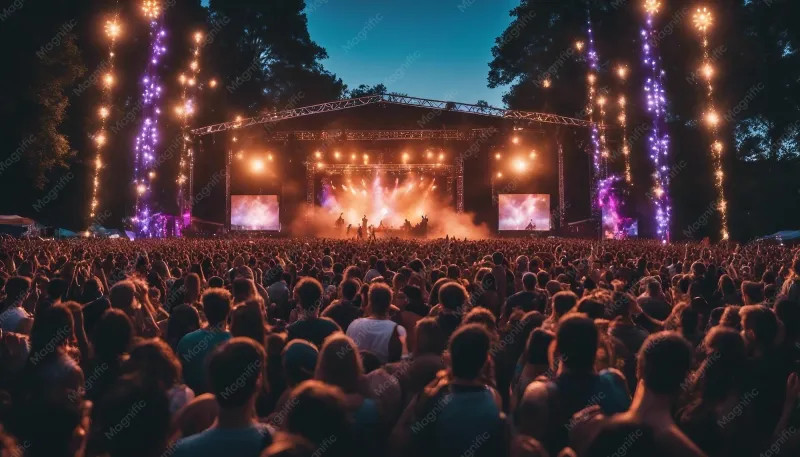
Festival culture is where this distortion gets most visible. Every summer, a handful of events dominate the cultural conversation — partly because they're genuinely well-produced, and partly because they've mastered the art of generating content. Crowds go because other crowds went. Lineups get booked based on who's trending, not who's transcendent.
This creates a feedback loop that's increasingly difficult to opt out of. The "must-see" act becomes must-see because everyone says so, not because you've actually listened to them and felt something. And when you get there and the energy is... fine? Technically impressive? You're left wondering if you're the problem.
You're not the problem. You just let someone else's enthusiasm do your taste-making for you.
Tastemakers in the independent music world have been pushing back on this for years. Zoe Sheridan, who books talent for a mid-sized festival circuit in the Southeast, put it plainly in a recent conversation: "The shows I've seen blow people's minds are almost never the headliners. They're the 4 p.m. set on the small stage by someone nobody flew in to see. But you have to be willing to show up for that, which means you have to care about something other than the poster."
What Your Instincts Are Actually Tracking
When you get a gut feeling about an event — a quiet pull toward a show that doesn't have a big marketing budget, or a nagging sense that the hyped thing isn't really for you — that instinct is doing real work.
Audience psychology researchers describe this as "aesthetic self-knowledge": the accumulated understanding of your own sensory and emotional responses built up through years of lived experience. You know, on some level, whether you prefer intimate rooms to big stages. Whether you're more moved by raw performance than polished production. Whether you want to be part of a crowd or slightly on the edge of one.
None of that knowledge lives in your Spotify data. It lives in your memory — the shows that made you cry, the festivals where you felt genuinely free, the gallery opening where you stood in front of one piece for twenty minutes without knowing why.
The problem isn't that you don't have good instincts. It's that the noise of recommendations and social proof makes it easy to stop consulting them.
How to Recalibrate Toward Your Own Taste
This doesn't require throwing your phone in a lake. It just requires building a few different habits around how you evaluate events before committing.
Ask yourself the pre-hype question. Before you look at reviews or ticket sales numbers, ask: if nobody I knew had mentioned this, would I still be interested? If the answer is yes, that's a meaningful signal. If the honest answer is no, that's worth sitting with.
Read the event description, not the crowd response. What's actually happening at this show? What's the artist trying to do? What's the venue's history? The texture of an event often tells you more than its popularity metrics ever could.
Revisit your personal highlight reel. Think back to the five or ten live events that genuinely moved you. What did they have in common? Was it the venue size? The genre? The time of day? The people you were with? Patterns emerge quickly, and they're more useful than any recommendation engine.
Give smaller and newer acts a fair shot. Emerging artists at their early touring stage are often performing with a hunger and specificity that disappears once they scale up. Catching someone in a 200-cap room before they're playing theaters is one of the genuine pleasures of live event culture — but you won't find it by following the algorithm.
The Confidence to Show Up for Yourself
There's a social dimension to all of this that's worth naming. Choosing events based on your own taste rather than collective hype can feel isolating, especially when everyone else is going to the same thing and you're not. There's a low-grade social anxiety in opting out of the conversation.
But the people who develop real, distinctive taste in live events — who become the person others come to for recommendations — are almost always the ones who spent time building a relationship with their own preferences rather than outsourcing that job to a platform.
You don't have to be contrarian about it. The hyped show might genuinely be great. But go because you want to be there, not because the algorithm told you to want it. That shift in orientation changes everything about how the evening lands.
The most memorable night you'll have this year probably isn't the one everybody's already bought tickets to. It's the one you almost talked yourself out of attending — and didn't.