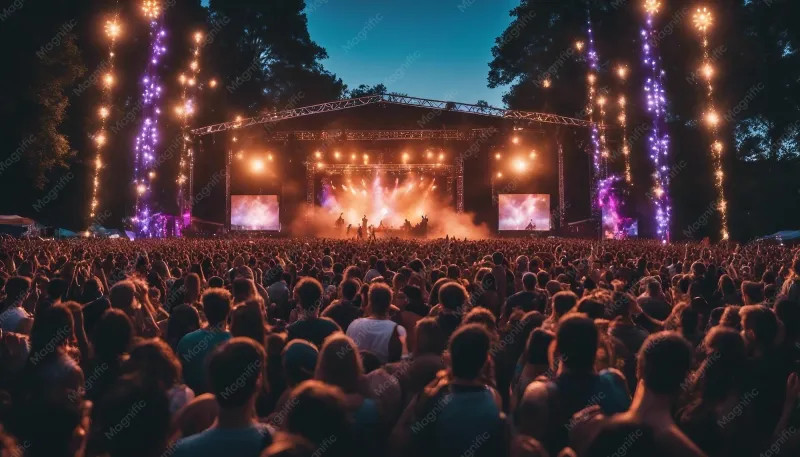
Never Miss Another Great Show: How to Build a Year's Worth of Events You'll Actually Love
Photo: Mifrah92, CC0, via Wikimedia Commons
You know that person. Every time something incredible happens in your city—a surprise pop-up show, a food festival you would've loved, a free outdoor film screening with a perfect lineup—they were there. And somehow they heard about it weeks in advance, got the early-bird tickets, and brought exactly the right group of friends.
That person isn't just lucky. They have a system.
Building a personal events calendar that actually reflects what you care about isn't rocket science, but it does require thinking a little differently about how you discover, evaluate, and commit to local happenings. Here's the full breakdown.
Start by Knowing What You're Actually Looking For
Before you build any kind of system, you need a clearer picture of what a good event looks like to you. This sounds simple, but most people skip it—and end up either overcommitting to things that drain them or passing on experiences they would've genuinely loved.
Take ten minutes and ask yourself a few real questions. Do you want to go out more solo, or are you building a social calendar for a group? Are you more energized by intimate 100-person shows or big outdoor festivals? Do you care more about the music, the food, the people, or just getting out of the house?
Your answers will shape everything downstream. Someone who loves discovering new local musicians has a completely different discovery strategy than someone who primarily wants family-friendly weekend activities or someone chasing underground art events.
No judgment on any of it. Just get honest with yourself before you start building.
The Discovery Stack: Where the Good Stuff Actually Lives
Here's the uncomfortable truth about Eventbrite and similar platforms: they're fine for mainstream events, but they systematically underrepresent the most interesting stuff happening in your city. Independent shows, community-organized events, and anything with a small marketing budget tends to live elsewhere.
So where do you actually look?
Local newsletters and blogs are the single most underrated discovery tool in existence. Almost every mid-sized American city has at least one person—sometimes a whole team—running a hyperlocal events roundup. These writers know their communities, have relationships with organizers, and regularly surface things that never make it onto national platforms. Search "[your city] events newsletter" and start subscribing to everything that looks relevant. You can always unsubscribe.
Independent promoter social accounts are another goldmine. Promoters—the people who actually book and organize events, not just the venues—often announce shows on their personal Instagram or Twitter accounts before anything goes live anywhere else. Find two or three in your city and follow them closely. Turn on notifications if you're serious about it.
Discord and Facebook Groups have become increasingly central to local event culture, especially for music, gaming, and arts communities. Search for your city plus whatever you're into—"Austin live music," "Chicago art events," "Denver food festivals"—and you'll find communities where real enthusiasts share tips, sell tickets, and organize meetups. These groups are also great places to ask direct questions and get actual answers from people who know.
Venue websites directly. This one gets overlooked because it feels old-fashioned, but most venues update their own calendars before anything gets syndicated to listing sites. If there are three or four spots in your city where you consistently have a good time, bookmark their event pages and check them weekly.
Building the Calendar Itself
Discovering events is only half the battle. The other half is actually organizing what you find so it doesn't become a chaotic mess of browser tabs and forgotten screenshots.
The simplest system that actually works: a dedicated calendar (Google Calendar is fine) where you create events the moment you find something interesting—not when you decide to commit, but when you first encounter it. Give yourself two categories: "Interested" and "Confirmed." Everything starts in Interested. When you've decided you're going, bought a ticket, or made a plan with friends, it moves to Confirmed.
This approach keeps possibilities visible without creating false pressure. You're not saying yes to everything you add—you're just making sure you don't forget about it.
For people who want to go deeper, a simple spreadsheet can add useful context: event name, date, cost, venue, where you heard about it, and a notes column for things like "need to buy tickets by X date" or "good for a group of four." It sounds like overkill until the third time you forget about something you were excited about.
The Art of Saying No (Strategically)
Here's a counterintuitive truth about people who always seem to go to great events: they say no a lot. They're selective in a way that looks effortless from the outside but is actually very deliberate.
When you have a well-stocked calendar of possibilities, you can afford to be picky. Not every interesting event is worth your Friday night. Not every festival that looks good on Instagram will actually match your energy.
A few questions worth asking before you commit:
- Is this genuinely something I want, or am I going because I feel like I should?
- Does this fit my current bandwidth—financially, socially, physically?
- Is there something else happening the same weekend that I'd rather prioritize?
Protecting your capacity to actually enjoy events means not saying yes to everything that crosses your path. The goal isn't to attend more things—it's to attend more right things.
Real Examples from Real Cities
In Portland, Oregon, a group of friends built a shared Google Calendar called "The Pile" where anyone in the group can add events they're interested in. Every Sunday night, they spend about ten minutes reviewing what's coming up and deciding together what they're actually doing. Simple, low-pressure, and it's led to years of shared experiences they'd have otherwise missed.
In Atlanta, a local music blogger posts a weekly roundup every Thursday specifically covering shows under $20—a constraint that forces her to dig past the obvious stuff and surface genuinely independent programming. Her newsletter has become one of the most trusted discovery tools in the city's music scene.
In Seattle, a community Discord server for local arts events has grown to several thousand members who share listings, review events in real time, and coordinate last-minute ticket swaps. It started with maybe 30 people and grew entirely by word of mouth.
None of these systems are complicated. They're just intentional.
The Long Game
The best thing about building a real events discovery practice is that it compounds over time. The more you go out—especially to smaller, independent things—the more you become part of the networks where the best information lives. Organizers start recognizing you. Other attendees become friends. You end up on invite lists and group chats that never get advertised anywhere.
At some point, you stop being someone who finds great events and start being someone great events find.
That's the real destination. And it starts with a calendar, a few good newsletters, and showing up.