Too Many Things to Do, Not Enough Weekend: A Real Person's Guide to Picking Your Events Wisely

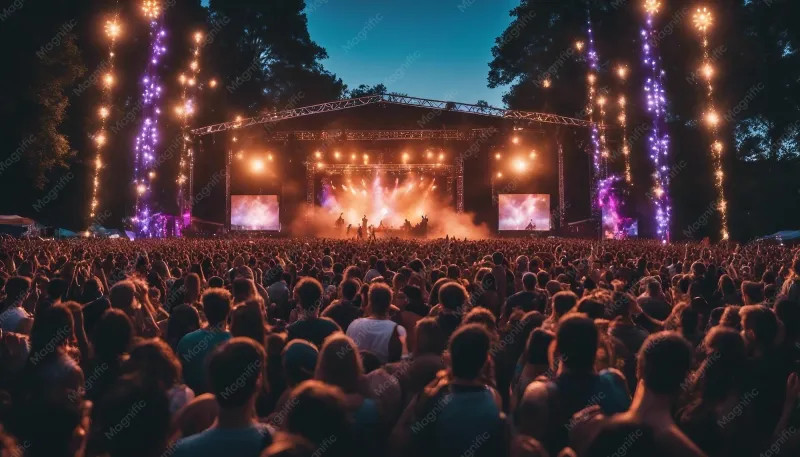
Photo: Shixart1985, CC BY 2.0, via Wikimedia Commons
Let me paint a picture. It's Thursday afternoon. You've got three event invites sitting in your inbox, a festival flyer someone texted you, a gallery opening your coworker mentioned twice, and a neighborhood concert series you've been meaning to check out since June. Your weekend is technically free. And yet somehow, by Sunday evening, you feel vaguely guilty, a little tired, and not entirely sure what you actually did.
Welcome to cultural event burnout — the weird exhaustion that comes not from doing too much, but from constantly negotiating with yourself about what to do.
It's a real thing. And if you live somewhere with a halfway decent local arts and entertainment scene, you've probably felt it.
The Paradox at the Heart of a Full Calendar
Here's the uncomfortable truth: more options don't make us happier. Psychologists have been writing about this for decades — Barry Schwartz literally called it The Paradox of Choice back in 2004 — but it's never felt more relevant than in the current era of hyper-local event discovery.
Between Instagram event pages, Eventbrite, local Facebook groups, neighborhood newsletters, and apps like Meetup and Bandsintown, the average person in a mid-sized American city has access to more cultural programming than any generation before them. That's genuinely wonderful. It's also genuinely exhausting.
The problem isn't the abundance. It's that we haven't updated our decision-making habits to match it. Most of us are still operating on a kind of cultural FOMO autopilot — saying yes to things because they sound cool in theory, or because a friend is going, or because we feel like we should be the kind of person who goes to jazz brunches on Sunday mornings.
Spoiler: you don't have to be.
Step One: Get Honest About What You Actually Enjoy
This sounds obvious, but it's genuinely harder than it seems. Think about the last five events you attended. Which ones do you actually remember with warmth? Which ones were you counting down the clock at?
Most people, when they really examine their patterns, discover that they enjoy a much narrower slice of cultural programming than their event calendar suggests. Maybe you love live music but hate standing in crowds. Maybe theater is your thing, but only when the venue is small and the run time is under two hours. Maybe you show up for food festivals but bail on art walks every single time.
That self-knowledge is gold. Write it down if you have to. "I reliably enjoy: outdoor concerts, documentary screenings, food events with a cultural angle. I reliably don't enjoy: anything that requires me to stand for more than two hours, events where I don't know a single person, things that start after 9 PM on a weekday."
Once you have that list, your decision-making gets dramatically simpler.
Step Two: Build a Tiered System (Seriously, It Helps)
Not all events deserve the same amount of your mental energy. A useful framework is to sort incoming invites and listings into three buckets:
Anchor events — These are the things you're genuinely excited about, the ones that go on the calendar first and don't get bumped. Maybe it's a specific band you've been waiting to see, or an annual festival you attend every year. Protect these.
Flex events — These are the "sounds good, I'll go if I'm feeling it" options. You don't commit hard, but you keep them on your radar. If Sunday afternoon rolls around and you have energy, you go. If you don't, you don't.
Pass events — Things that don't align with your actual interests, that require too much logistical effort, or that you're only considering because of social pressure. Give yourself permission to skip these without guilt. Radical concept, I know.
The goal isn't to attend fewer things necessarily — it's to make sure the things you do attend actually land.
Step Three: Rethink What FOMO Is Actually Telling You
FOMO — fear of missing out — is the enemy of intentional event-going. But here's the reframe: FOMO isn't really about the event. It's about a feeling of disconnection, of falling behind socially, of not being where the energy is.
And here's the thing about local cultural events specifically: the energy isn't at any one event. It's distributed across dozens of them, every single week. There will always be another festival, another opening, another show. The idea that you're missing the thing by skipping a thing is almost never accurate.
When you feel the pull of FOMO, ask yourself: "Is this about genuine interest, or is this about anxiety?" It's a clarifying question. Most of the time, you already know the answer.
Step Four: Build Your Personal Weekly Cultural Rhythm
Instead of reacting to events as they come, try building a loose weekly framework that matches your actual life. Some people find it helpful to designate one night a week as their "out" night — the evening they're open to cultural programming, no negotiation needed. Everything else is evaluated against real capacity, not theoretical enthusiasm.
For weekends, consider the "one anchor, one flex" rule: commit to one event that genuinely excites you, and keep one slot open for spontaneous decisions. This gives you structure without turning your free time into a scheduling project.
And please — block out some weekends entirely. Not every Saturday needs to be a cultural experience. Sometimes the best thing you can do for your relationship with local arts and entertainment is give yourself a full weekend of absolutely nothing, so you come back hungry.
The Bottom Line
Your city has incredible things happening. Theater, music, food, art, film, community gatherings — the cultural richness of American local life right now is genuinely something to celebrate. But none of it matters if you're showing up burned out, distracted, or resentful of your own calendar.
Choose less. Enjoy more. And stop apologizing for skipping the things that were never really for you in the first place.
Your weekend is yours. Spend it like you mean it.