Small Cities, Big Sounds: The Grassroots Festival Movement Changing How America Parties
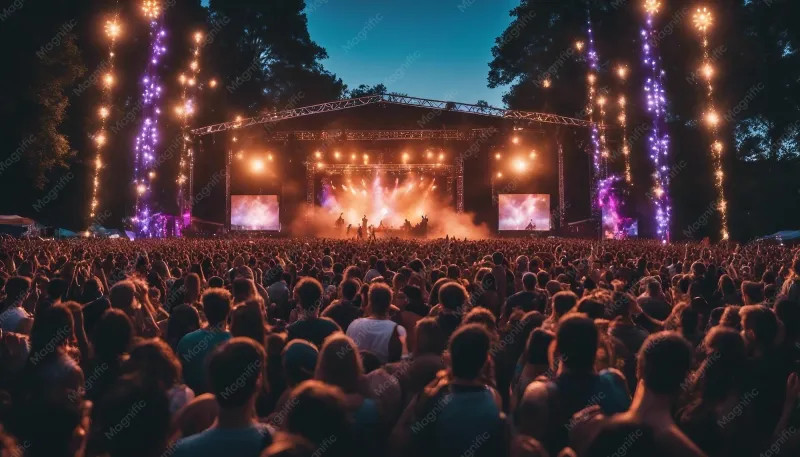
Photo: outdoor grassroots music festival small city crowd stage, via img.freepik.com
Somewhere between the VIP wristbands and the $18 craft cocktails at your average mega-festival, something got lost. The music, sure — but more than that, the feeling that you were part of something real. That's exactly the gap that a growing wave of hyper-local festival organizers is rushing to fill, and they're doing it in places you might not expect: Chattanooga, Boise, Fayetteville, Eau Claire.
This isn't a niche trend anymore. It's a full-blown movement.
From Backyards to Block Parties: How It Started
Ask most grassroots festival founders how their event began, and you'll get some version of the same story. Marcus Webb, who co-founded the Lowline Music Gathering in Huntsville, Alabama, put it bluntly: "We were driving four hours to Atlanta for shows and thinking — why aren't people doing this here? Huntsville has incredible musicians. We just weren't giving them a stage."
So in 2019, Webb and two friends rented a parking lot, booked twelve local and regional acts, charged $15 at the door, and watched 400 people show up. By 2023, Lowline had grown to a two-day event drawing nearly 3,000 attendees — still no corporate sponsors, still community-run.
That story echoes across the country. In Missoula, Montana, the Riverstone Sessions started as a free Saturday afternoon series in a city park. In Akron, Ohio, the Rubber City Roots Festival was born out of a local record shop's anniversary party. These events didn't follow a business plan. They followed a feeling.
Why Audiences Are Choosing Local Over Massive
There's a real exhaustion setting in around the mega-festival experience. Ticket prices for the big names — Lollapalooza, Bonnaroo, Austin City Limits — have climbed steadily, with general admission passes now regularly cracking $400 before fees. And that's before you factor in travel, lodging, and the logistical nightmare of navigating 100,000 strangers in a field.
But it's not just the cost. It's the vibe.
"People are hungry for authenticity," says Dr. Lena Castillo, a cultural studies researcher at the University of Tennessee who studies live music communities. "When a festival is built by people who actually live in that city, who grew up going to those same local venues, the audience can feel it. There's a trust there that's really hard to manufacture."
That trust translates into loyalty. Attendees at smaller regional festivals are significantly more likely to return year after year — and to bring friends. Word-of-mouth becomes the primary marketing channel, which keeps overhead low and the culture intact.
The Lineup Problem (And Why It Might Be a Feature, Not a Bug)
Here's the thing about hyper-local festivals: you probably won't recognize half the lineup. And that, organizers will tell you, is entirely the point.
Cassie Tran, who runs the Bayou Circuit Festival in Lafayette, Louisiana, books roughly 70% local and regional artists each year. "I get asked all the time, 'Why don't you bring in a big headliner?' And I get it — that's how you sell tickets fast. But we're not trying to sell tickets fast. We're trying to build something that means something to this community ten years from now."
For many attendees, discovering a new favorite band at a local festival has become part of the appeal. There's a treasure-hunt quality to it — wandering between stages, stumbling onto a set that floors you, and then telling everyone you know. That experience is nearly impossible to replicate when you're watching a legacy act from 200 feet away.
The Economics of Keeping It Independent
Running a festival without corporate backing is genuinely hard. Permits, insurance, sound equipment, artist fees, portable restrooms — it adds up fast. Most grassroots organizers operate on razor-thin margins, at least in the early years.
But a growing number are finding creative ways to make it work. Merchandise partnerships with local businesses, sliding-scale ticketing, crowdfunding campaigns, and revenue-sharing arrangements with food vendors have all become standard tools in the independent organizer's toolkit.
Some festivals have leaned into their local identity as a fundraising asset. The Porch & Prairie Festival in Lawrence, Kansas, partners with area farms and breweries for an immersive food-and-music experience that neither party could pull off alone. The result? A built-in sponsor ecosystem that actually enhances the event rather than plastering logos everywhere.
"We don't take money from anyone whose name would feel weird on our stage," says Webb. "That's the line. Once you cross it, you start making decisions for the wrong reasons."
What This Means for Your City
If you're reading this and thinking your town couldn't support something like this — think again. The cities seeing the most exciting grassroots festival growth right now aren't the ones with the biggest populations. They're the ones with engaged local music scenes, a few motivated organizers, and communities that are just a little bit tired of driving to the nearest major metro for a good show.
Check your city's parks and recreation calendar. Look up your local venue's social media. That small outdoor concert series happening in the warehouse district? It might be the beginning of something.
The next great American music festival probably isn't being planned in Los Angeles or New York right now. It's being planned in someone's living room in a city you've driven through on the highway — and it might be more worth your weekend than anything with a corporate logo on the main stage.
Keep your eyes open. The underground is coming up.