Seven Reasons Your Screen Will Never Replicate the Real Thing
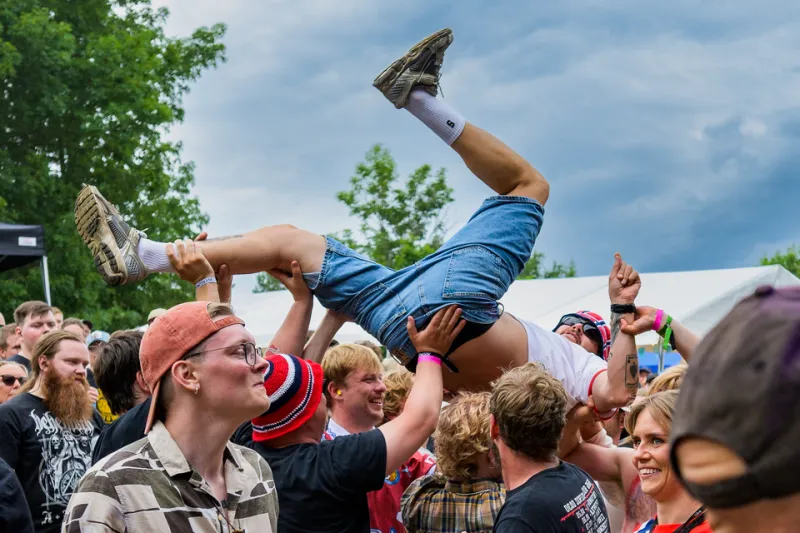
Photo: Birgit Fostervold, CC BY-SA 4.0, via Wikimedia Commons
You can watch literally any concert ever filmed from your couch. The sound is mixed better than what the people in the venue heard. The camera angles are impossible. And yet ticket sales keep climbing, festival grounds keep expanding, and your friend who 'saw the whole set on YouTube' keeps saying 'you had to be there.'
Both things are true. Which raises the obvious question: what exactly is the 'there' that a screen can't ship to your living room? Turns out it's not one thing. It's at least seven.
1. The Collective Gasp
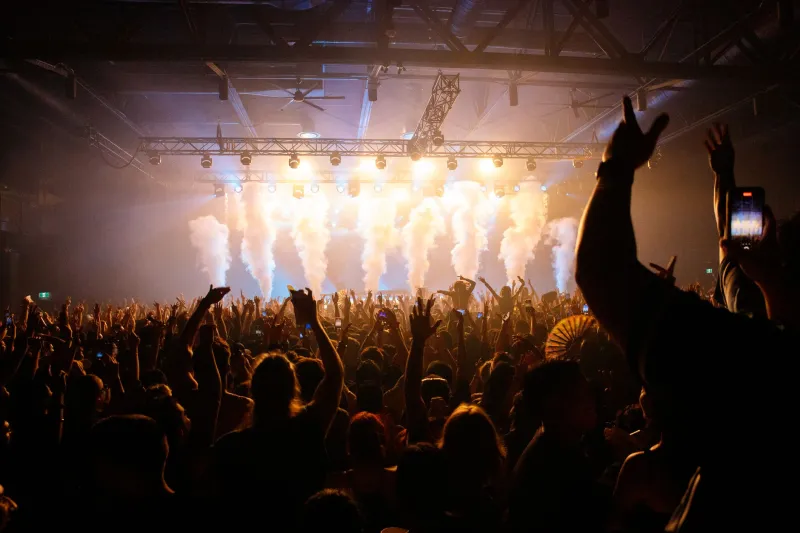
When something unexpected happens — the surprise guest walks out, the acoustic guitar comes out for the deep cut, the proposal in the pit — a thousand strangers inhale at the same instant. You don't hear a collective gasp on a livestream. You hear a mix engineer's fader move. In the room, it's a physical event, and your body is part of it.
2. The Flub That Becomes Legend
Every artist forgets lyrics, breaks a string, or calls a city by the wrong name eventually. On a recorded track, that's an error to be edited out. Live, it's the story everyone tells for a decade. The night the singer's voice cracked on the big ballad and the whole crowd finished the line for her? You can't stream that. That moment literally ceases to exist the moment the stream ends.
3. Bass You Feel in Your Sternum
No speaker system in a normal home reproduces sub-bass at physical volume. At a show, the low end doesn't hit your ears — it hits your chest, your teeth, the floor through your shoes. It's the difference between reading about a wave and being in one.
4. Strangers Becoming Temporary Family
Somewhere around the second hour, the people around you stop being strangers. You've got a code word with the person next to you about holding spots during bathroom runs. Someone hands you water. Someone else lifts a stranger's kid onto their shoulders so they can see. This social chemistry has a half-life of exactly one night, and it cannot be manufactured remotely.
5. The Setlist Gamble
Recorded music is a finished product. Live music is a decision happening in real time — what to play, what to skip, whether to extend the jam because the crowd wouldn't stop cheering. When the artist plays the album cut they haven't touched in five years, everyone in that room shares a piece of information that no future recording will fully capture.
6. The Applause Loop
At home, when a song ends, you might clap alone in your kitchen, which is either sweet or concerning. In a venue, the applause feeds back to the stage and the artist responds to it — plays one more, digs deeper, tells the story they were going to skip. The crowd isn't consuming the performance. It's steering it.
7. The Commemorative Nothing
Here's the funny one: the best proof you were there is usually nothing at all. A wristband, a ticket stub, a ringing in your ears on the drive home. Not a perfect video you'll never rewatch. The memory of the thing is the souvenir, and its imperfection — 'wait, did they play the encore or did we just cheer for nothing?' — is exactly what makes it yours.
The Honest Caveat
None of this means streaming is bad. It's an incredible discovery engine and a lifeline for people who can't get out. But it's a menu, not a meal. Every one of the seven things above requires your physical presence, your full attention, and your willingness to be one body in a room full of them.
Convenience got you in the door of this article. The sternum-bass and the strangers and the unrepeatable flub are why you'll keep buying tickets. Pick something on the calendar this month and go be un-streamable for a night.