The Whisper Network: How a Single Honest Recommendation Still Outperforms Every Ad You've Ever Seen
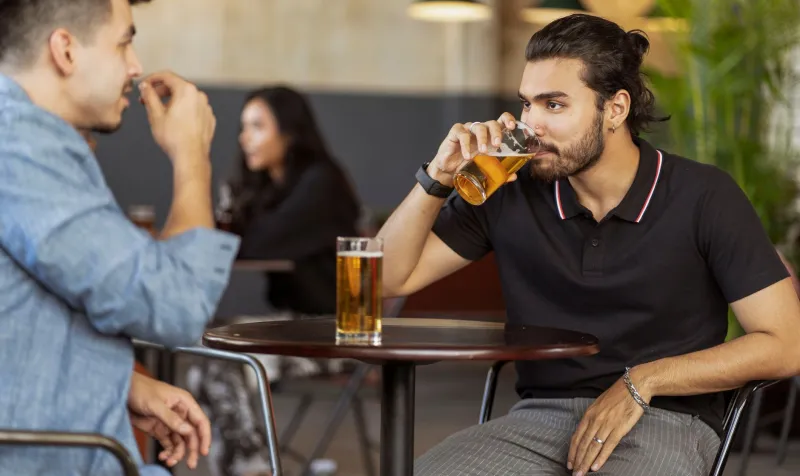
Somebody told somebody, who told somebody else. That's how half the best nights of your life probably started. Not a targeted ad. Not a sponsored post that somehow knew you'd been thinking about live jazz. Just a person you trust saying, "You have to go to this thing."
In an era where every venue has an Instagram account, a Spotify playlist, and a marketing budget they can't really afford, the most powerful promotional tool in local entertainment is still the one that can't be bought: a genuinely excited human being talking to another human being.
The Ad Budget Illusion
Ask almost any independent venue owner about their marketing spend and you'll get a complicated look followed by a complicated answer. The money goes in — Facebook ads, event listings, email blasts — and something comes back, but rarely in a straight line you can trace.
"We ran a paid campaign for a whole month once and sold maybe thirty extra tickets," says one venue manager in the midwest who books a mix of regional touring acts and local originals. "Then one of our regulars mentioned the show to her book club and we sold out a Thursday night in two days. You can't manufacture that."
That's not an isolated story. Talk to enough people who run small clubs, DIY spaces, or community arts venues and you start to hear the same thing over and over: the nights that genuinely pack out are almost always the nights where real word-of-mouth caught fire. The ads might get someone to glance at a flyer. The recommendation gets them to actually show up.
What Makes a Recommendation Land
Not all word-of-mouth is created equal. There's a meaningful difference between someone sharing an event link in a group chat because they saw it and thought "eh, maybe" and someone grabbing their coworker by the shoulder on a Monday morning and saying "I need you to clear your Friday."
The second one converts. The first one mostly doesn't.
Promoters who've been doing this long enough have a name for the people who generate that second kind of energy. They're called different things in different scenes — connectors, tastemakers, scene anchors — but the function is the same. These are the people whose taste is so trusted within their social circle that a single text from them is worth more than a hundred paid impressions.
"Every show I've ever done that sold out, I can trace it back to three or four specific people who were actually fired up about it," says an independent promoter who's been putting on shows in mid-sized American cities for over a decade. "Not people who posted about it. People who talked about it. Like, verbally. In person and on the phone."
The distinction matters more than it might seem.
The Performance Problem With Social Media Enthusiasm
Here's the uncomfortable truth about event promotion in the social media age: a lot of what looks like excitement is actually performance. Someone shares a show because sharing things is a social behavior, not necessarily because they're telling you something true about their own experience or expectations.
Venues have noticed. Regular attendees have noticed. And in a weird way, potential ticket buyers have noticed too, even if they can't articulate exactly why a particular post feels hollow.
"People can smell the difference between someone who's genuinely hyped and someone who's just doing their part," says one long-time concert regular in the Pacific Northwest who estimates she attends close to eighty live events a year. "When my friend texts me out of nowhere and says 'this band wrecked me last night, you need to see them,' I'm buying a ticket before I even look them up. When I see a venue reposting the same promotional graphic for the fourth time, I scroll past it."
Authenticity isn't a marketing strategy. It's the thing marketing strategies are desperately trying to simulate.
How Venues Actually Cultivate It
So what do venues do with this knowledge? The smart ones stop trying to manufacture buzz and start investing in the conditions that let real enthusiasm spread naturally.
That means treating regulars like the assets they are. It means making sure the first-time experience is good enough that people want to talk about it. It means booking with enough conviction that the staff themselves are genuinely excited — because customers feel that too, and it's contagious in both directions.
Some venues take a more deliberate approach. A few have started quiet "inner circle" programs — not flashy loyalty schemes, just a small group of trusted regulars who get early access to announcements and are explicitly asked to spread the word if something excites them. No incentives beyond the early info. Just a bet that people who already love the space will be honest advocates if you treat them like partners.
"We don't pay them, we don't give them free tickets, we just tell them first," explains one venue coordinator who runs a mid-sized listening room in the South. "And because there's no transaction, when they tell their friends, their friends believe them. That's the whole thing."
The Geography of the Whisper Network
Word-of-mouth also has a geography that matters for local entertainment specifically. It travels through clusters — the regulars at a particular bar, the members of a rec league, the parents at a school pickup line who happen to share a taste for live music. An event that cracks into one of those clusters can fill out faster than any algorithm-driven campaign.
This is why hyper-local credibility matters so much more than broad online reach for most independent venues. Five hundred followers in your actual city who trust your taste is worth more than ten thousand followers spread across the country who will never buy a ticket.
The venues that understand this tend to invest in their physical community — hosting events that bring people together in ways that have nothing to do with ticket sales, building relationships that make the recommendation feel personal because it actually is.
Why This Should Matter to You as an Attendee
If you love a venue, a scene, or a particular kind of night out, you are part of this network whether you think about it that way or not. Every time you tell someone "you'd love this place" with real conviction, you're doing something that a marketing budget genuinely cannot replicate.
And the inverse is true too. The shows that go half-empty, the venues that close before they should, the local artists who never quite break through — sometimes that comes down to a gap in the whisper network. Not because the thing wasn't good enough, but because the right people didn't hear about it from the right person at the right moment.
You have more power in this ecosystem than you probably realize. Use it like you mean it.