From Dusty to Destination: How Forgotten Spaces Are Becoming the Most Exciting Venues in Your City
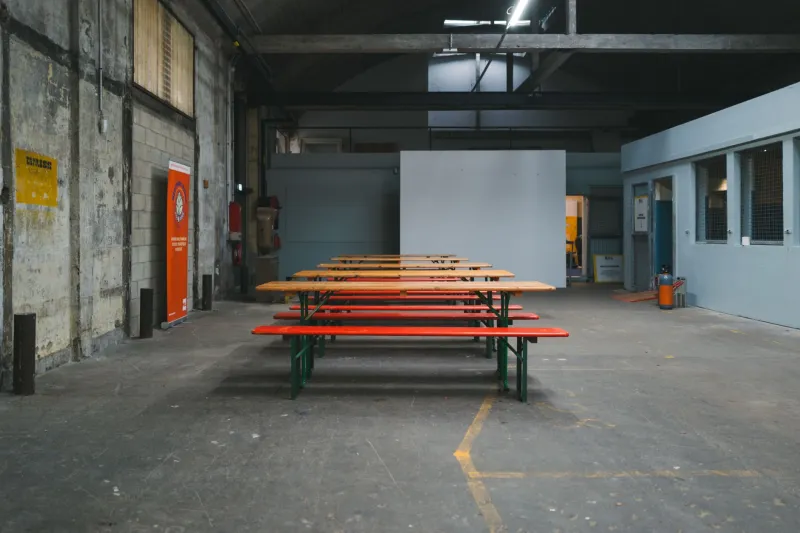
There's a building in your city right now that nobody's paying attention to. Maybe it's a warehouse off the industrial corridor that smells faintly of motor oil and old wood. Maybe it's a shuttered furniture showroom with sixteen-foot ceilings and terrible parking. Maybe it's a rooftop above a dry cleaner that nobody's thought twice about in thirty years.
Somebody is about to turn it into your favorite night out.
Across the country, a quiet but genuinely exciting transformation is happening in how cities think about entertainment space. The traditional model — book a club, book a theater, book a bar with a back room — is still alive, but it's no longer the only game in town. A growing movement of venue entrepreneurs, artist collectives, and event producers are hunting down the overlooked and the underutilized, and what they're building in those spaces is changing the texture of local nightlife in ways that feel less like a trend and more like a reset.
The Problem With "Normal" Venues
Here's the thing about your standard club or mid-size concert venue: it was designed to be a venue. That sounds obvious, but it's actually a limitation. The sightlines are calculated. The acoustics are engineered for a specific sound profile. The bar is positioned to maximize throughput. Everything has been optimized for a transaction.
That efficiency is useful. It's also kind of boring.
When you walk into a space that was not designed to host a crowd — a converted textile mill, a pop-up gallery inside a former auto body shop, a courtyard behind a building that's been empty since the last recession — something different happens. The space itself becomes part of the experience. You're not just attending an event. You're discovering a place, and that discovery creates a kind of low-key wonder that a purpose-built venue simply can't manufacture.
Artists have known this for decades. What's new is that the infrastructure — the logistics, the licensing, the production capacity — is finally catching up to the vision.
Who's Actually Doing This Work
The people driving this movement aren't a monolith. Some are developers with an eye for adaptive reuse. Some are collectives of artists and promoters who got tired of paying venue fees that ate their entire gate. Some are city governments and nonprofit arts organizations trying to activate underused real estate. Plenty are just scrappy local operators who saw a space and had an idea.
In cities like Detroit, Pittsburgh, New Orleans, and Albuquerque — places with abundant underutilized square footage and deep creative communities — these projects have been percolating for years. But the trend is accelerating in mid-size cities everywhere, from Chattanooga to Spokane to Baton Rouge, where the cost of traditional venue operation is squeezing out the mid-tier acts and independent promoters who used to anchor local entertainment calendars.
What unites these operators is a willingness to treat the space itself as a design decision. They're asking: what does this room want to be? And then they're building programming around the answer instead of forcing the space into a generic box.
What These Nights Actually Look Like
Forget the mental image of a grungy DIY basement show. That's not what this is — or at least, it's only a small part of it.
The venue renaissance is producing events that run the full spectrum. A former printing warehouse in a mid-sized Midwest city hosts a monthly ambient music series where the industrial echo of the room is treated as an instrument. A decommissioned train depot in the South becomes the setting for a rotating food-and-music festival that draws regional chefs and touring bands in the same weekend. A parking structure rooftop in a coastal city gets transformed every summer into an open-air cinema series with a craft cocktail pop-up and a local DJ warming up the crowd before the film rolls.
These aren't accidents. They're the result of people who genuinely care about the intersection of place and experience — and who've figured out that the right unusual space, done thoughtfully, will generate more word-of-mouth than any marketing budget could buy.
Why Artists Are Gravitating Toward Unconventional Rooms
There's a practical angle here that's worth understanding. For a working musician or a visual artist trying to mount an immersive installation, traditional venues come with a lot of baggage. You're competing for dates on a calendar managed by someone whose primary interest is in-house alcohol sales. You're conforming to a stage setup designed for whoever played there last week. You're splitting revenue in ways that often don't favor the artist.
Unconventional spaces, particularly when run by collectives or artist-forward operators, tend to offer more flexibility. The deal structures are different. The creative control is greater. And because these spaces aren't locked into a standard programming format, artists have more room to experiment — longer sets, unusual stage configurations, site-specific work that couldn't exist anywhere else.
For audiences, that experimentation translates into nights that feel genuinely singular. You're not watching a band run through their standard show in a room that looks like every other room. You're watching something that was built, at least partly, for this specific place on this specific night.
The Ripple Effect on Local Entertainment Ecosystems
Here's where it gets interesting from a bigger-picture perspective. When new venue types enter a local entertainment market, they don't just add options — they change the dynamics for everyone.
They create new entry points for emerging artists who might not be ready for, or interested in, the traditional venue ladder. They attract audiences who've drifted away from going out because the existing options stopped feeling fresh. They give promoters and producers new creative and financial models to work with. And they put gentle pressure on established venues to up their game, to think harder about what they're offering beyond just a room and a bar.
Cities that support this kind of experimentation — through sensible permitting, adaptive reuse incentives, and arts-forward economic development — tend to develop richer, more resilient entertainment ecosystems. The conventional clubs and theaters don't disappear. They just operate in a more interesting neighborhood.
How to Find These Nights in Your Own City
The honest answer is that these events don't always advertise loudly. Some of that is by design — exclusivity is part of the appeal for certain operators. But a lot of it is just that these collectives and producers don't have big marketing budgets.
Your best moves: follow local arts organizations and independent promoters on social media rather than venue accounts. Get on mailing lists for local galleries and creative spaces. Pay attention to event listings on neighborhood Facebook groups and community boards, which still surface a surprising amount of genuinely underground programming. And talk to people — the bartender at your usual spot, the person selling merch at the last show you went to. Word of mouth is still the primary distribution channel for the most interesting nights in most cities.
The spaces are already out there, waiting. Somebody's already got a plan for them. Your job is just to show up before everyone else figures it out.