Nobody Killed the Third Place. It Just Moved.
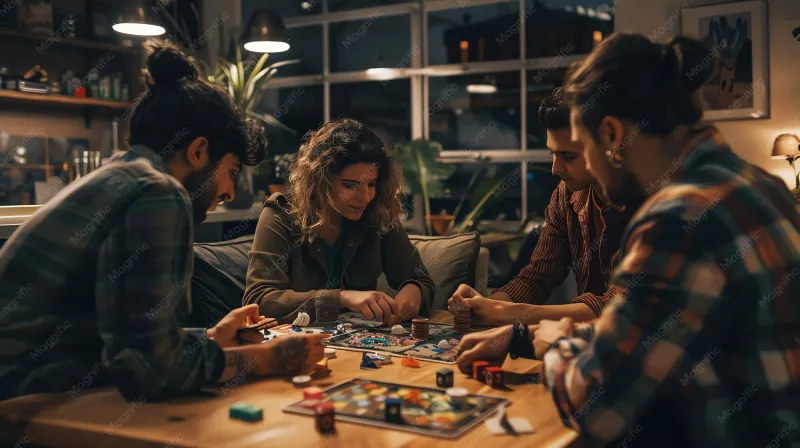
Photo: friends playing board games at cafe table laughing community, via img.freepik.com
Every few months, another think piece declares the death of the third place — that sociological term for the spots that aren't home and aren't work, where community actually happens. The data backs up the gloom, at least on the surface. Neighborhood bars are closing at a steady clip. The bowling alley with the sticky lanes is a condo building now. The Elks lodge? Ask your grandfather.
But here's my argument, and I'll defend it: nothing was killed. It moved. And if you're mourning the old addresses, you're missing the new ones entirely.
The Vacuum Nobody Planned to Fill
The old third places died for boring reasons — rents, drinking habits, cable packages that made staying home easier. What replaced them wasn't designed. Nobody sat in a conference room and said, "Let's build a new civic infrastructure." Instead, a bunch of unrelated experiments started working, mostly by accident, and they're quietly doing the job the corner bar used to do.
Consider the board game café. Ten years ago it was a niche for people who owned too many dice. Now it's a Saturday-night institution in mid-size cities from Portland, Maine to Portland, Oregon — a place where strangers share a table, argue about rules, and come back next week. That's not a retail concept. That's a lodge with better snacks.
Run Clubs, Supper Clubs, and the New Regulars
Or take the run club that ends at a brewery. On paper it's fitness. In practice it's the most reliable weekly gathering in dozens of American neighborhoods — a standing appointment where the workout is just the excuse and the beers afterward are the point. Nobody calls it a bar night, but functionally, that's exactly what it is, with endorphins instead of pool tables.
Supper clubs are doing the same thing from a different angle. Some run out of rented commercial kitchens, some out of private homes advertised by word of mouth and Instagram. You pay upfront, sit at a long table with people you've never met, and eat whatever the cook decided to make. It's a dinner party with strangers, and it's flourishing precisely because the old formal versions of this — the country club, the church potluck — stopped reaching people.
Notice the pattern? Every one of these spaces has three things the dying institutions had: a regular schedule, a low barrier to entry, and a reason to talk to the person next to you. That's the whole formula. It was never about the neon signs or the smoke.
Why Knowing Where Matters More Than Ever
Here's the catch, and it's a real one: the new third places are harder to find. The corner bar announced itself with a sign and a lit window. The run club is a group chat. The supper club is a password. The gathering didn't disappear — it went semi-underground, scattered across Discord servers, Eventbrite pages, and flyers taped to coffee shop corkboards.
Which means showing up now requires a little more effort than it used to. You have to look. You have to go once, alone maybe, and decide whether to come back. The old third places had gravity; the new ones need a push.
So the next time someone tells you nobody goes out anymore, push back. People go out constantly — they just do it at a board game café on a Thursday, at a 7 AM run that ends in a taproom, at a twenty-seat dinner in a rental kitchen. Going out isn't dying. It's just bad at forwarding mail. Find the new address, and the neighborhood shows up.