I Bought a Year Pass to One Venue and It Rewired My Entire Social Life
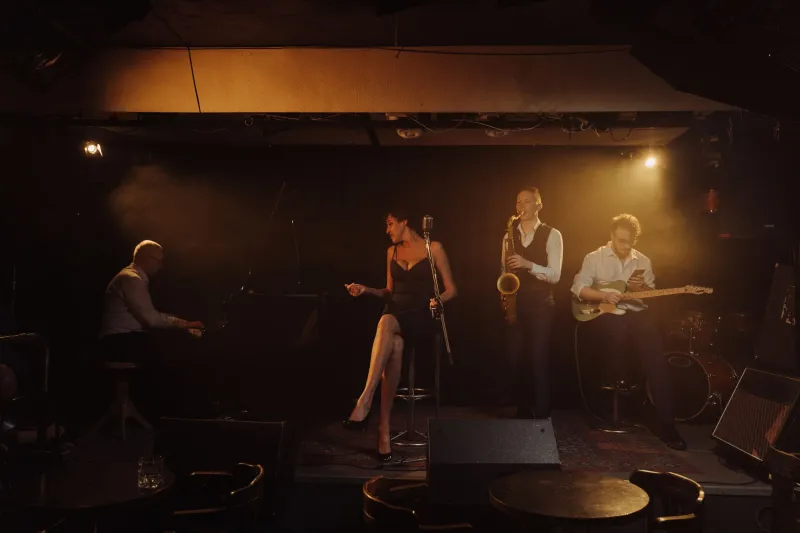
Last January, on a whim fueled by a New Year's resolution I half expected to abandon, I bought an annual membership to a small jazz club about twenty minutes from my apartment. It wasn't cheap — a few hundred dollars, roughly the price of three decent concert tickets. The deal included waived cover charges, priority seating, and a members-only pre-show hour I assumed I'd never use.
I made myself one rule: go at least twice a month, no exceptions, even when the lineup didn't excite me.
What follows is my attempt to explain what actually happened, because it was not what I expected.
Month One: The Awkward Phase
The first few visits felt like going to a gym. I'd arrive, order a drink, sit alone at the bar, and perform the role of Person Who Definitely Comes Here. I recognized nobody. I nodded at the bartender. I left after two sets.
If you've ever wondered why memberships lapse, it's this stretch right here — the gap between buying in and belonging. Nobody warns you about it. You just have to outlast it.
Month Three: The Faces Become People
Around the eight-week mark, something shifted. I started noticing the same faces: the older couple who always sat at the corner table, the guy who sketched during sets, the woman who requested standards and clapped like every solo was for her alone.
Then one night the bartender — who by now knew my order — said, 'You're here more than some of the musicians.' A stranger at the bar laughed, we started talking, and I spent the entire second set deep in a conversation about the drummer's weird cymbal choices.
That's the thing nobody tells you about repeat attendance: proximity plus repetition is the entire recipe for friendship. Not chemistry, not shared interests — just showing up to the same room on a schedule until strangers become fixtures.
The Perks Nobody Puts on the Website
The official benefits were fine. The unofficial ones were the real product:
- The bartender's nod. I'd walk in late to a sold-out Friday and there'd somehow be a seat. Regulars get invisible reservations.
- The musicians noticed me. After a few months, players started greeting me from the stage between songs. One asked what I'd thought of a new arrangement. I had opinions. He wanted them.
- The pre-show hour became my favorite hour. Members linger before doors open, and the conversations there — with staff, with other members, occasionally with the artists themselves — were better than most parties I've paid to attend.
- I stopped evaluating shows and started trusting the room. This was the biggest shift. Previously, I'd scrutinize every lineup like a portfolio manager. Now, if the club booked it, I went. And I was rarely disappointed, because the venue had already done the curating.
What Changed in Me, Not Just the Room
Here's the part I didn't anticipate: committing to one place changed my relationship with going out entirely. I stopped treating nights out as content to consume — was this show worth it? — and started treating them as time spent in a place I cared about.
Some nights were mediocre. A few sets were genuinely bad. I went anyway, and I'd sit there with my drink and think: this is fine, actually. This is the practice of being somewhere.
By October, I had a standing table. By December, I was on a first-name basis with half the room and had been invited to two regulars' holiday parties. My calendar, once a wasteland of 'maybe,' now had a heartbeat — two club nights a month that I never had to plan, negotiate, or feel ambivalent about.
Should You Do It?
Maybe you're not a jazz person. Fine. The venue doesn't matter — the community theater, the comedy cellar, the indie cinema with a membership tier, the listening room in the old mill. What matters is that it programs regularly, it's close enough to be a habit, and it needs people like you more than the arena down the highway does.
Buy the pass. Make the rule. Survive the awkward phase.
A year later, my membership renewed automatically and I didn't even flinch. It's the best-entertainment-value-per-dollar I've ever found, and that's honestly the least interesting thing about it.