Wednesday Is Pulling Its Weight Now: The Business Behind Venues Treating Midweek Like Prime Time
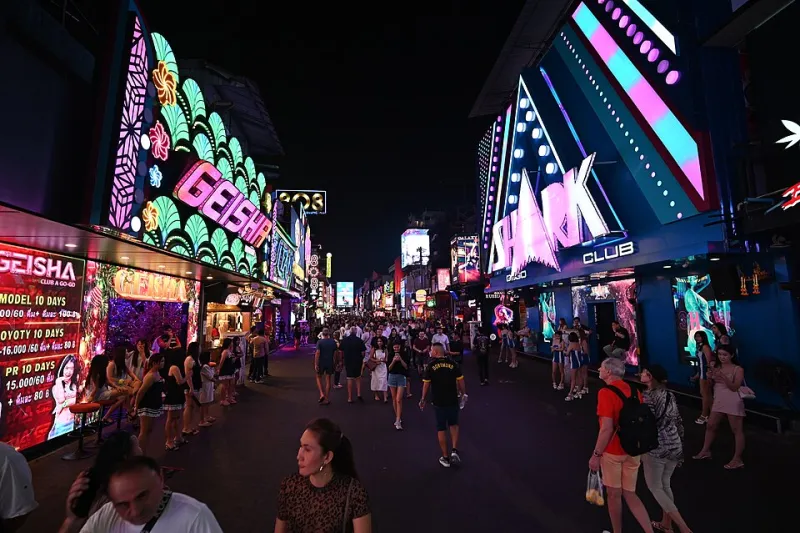
Photo: PattayaPatrol, CC BY-SA 4.0, via Wikimedia Commons
For a long time, the unspoken rule of going out was simple: the weekend is where the real stuff happens. Friday and Saturday owned the calendar. Tuesday through Thursday existed mostly as placeholder nights — a few regulars at the bar, maybe a trivia night if you were lucky, and the general understanding that nothing truly worth your time was scheduled before the weekend rolled around.
That understanding is quietly falling apart.
Across the country, venue managers, independent promoters, and booking agents are deliberately stacking Tuesday, Wednesday, and Thursday nights with programming that would have been reserved exclusively for weekend slots just five years ago. Nationally touring acts, headline DJs, immersive pop-up experiences, and ticketed cultural events are landing midweek with increasing regularity — and not as a consolation prize. They're landing there on purpose.
The Math That Changed Everything
The shift isn't accidental. It's arithmetic.
For venue operators, the weekend is both a goldmine and a bottleneck. Friday and Saturday nights are already near-capacity in terms of demand, staffing costs, and the competitive noise of every other venue in town fighting for the same audience. Adding one more big show to a Saturday doesn't dramatically increase revenue — it just adds operational stress.
Midweek is different. The overhead is lower. Staff is easier to schedule. Competing venues are mostly quiet. And here's the part that took a while for the industry to fully appreciate: the audience, while smaller, tends to be more intentional.
"The people who come out on a Wednesday made a real decision to be there," says one club manager in Chicago who books acts across a four-night weekly schedule. "They didn't just stumble in because it's Saturday and they had nothing else going on. They picked this. That energy in the room is different."
That intentionality translates into better per-head spending at the bar, higher merchandise sales at shows, and — critically — stronger word-of-mouth afterward. Venues have started to recognize that a well-attended Wednesday event can generate more organic buzz than a packed Friday show where half the crowd was just looking for somewhere to go.
Artists Are In on It Too
From the performer side, the midweek calendar has become genuinely attractive for reasons that go beyond just filling tour dates.
For developing and mid-tier artists, landing a Tuesday or Wednesday slot at a respected venue in a major market is increasingly seen as a smarter play than competing for weekend bookings. Weekend headline spots at smaller rooms often mean going up against bigger names at larger venues nearby. A well-promoted Wednesday show at the same room can feel like an event in itself — less competition, more focused attention, a crowd that actually came to see you.
Booking agents who work with emerging acts have started pitching midweek slots more aggressively to venues, especially in cities like Nashville, Austin, Denver, and Portland where the live music infrastructure is dense and the weekend market is genuinely saturated.
There's a pricing angle here too. Midweek ticket prices tend to run lower than equivalent weekend shows — sometimes significantly. For fans, that's a real incentive. For venues, slightly reduced ticket prices on a Wednesday can still generate solid revenue when combined with lower operational costs. The margin math works out in ways it simply doesn't on a Saturday when everything costs more to run.
What's Actually Getting Booked Midweek Now
It's not just music. The midweek programming push is happening across the full spectrum of what "going out" means in 2025.
Comedians who once only played weekend club sets are now headlining Thursday night specials that sell out weeks in advance. Art gallery openings, which traditionally clustered on Friday evenings, are moving to Wednesdays to capture an audience that's less distracted and more engaged. Immersive dining experiences, escape rooms with theatrical elements, and ticketed social events are all getting programmed into the Tuesday-Thursday window with intention.
The food and beverage industry noticed the trend early. Restaurant groups in cities like New York, LA, and Atlanta have been building "destination Wednesday" concepts — prix fixe dinners, guest chef nights, and themed pop-ups — specifically to pull people out of their midweek routines and into a spending mindset they'd usually reserve for the weekend.
The Regular Person's Calculus
Here's where it gets interesting for anyone who actually goes out.
The traditional argument against weeknight events was always the same: you've got work the next morning, the crowd will be thin, and whatever's happening won't be as good as the weekend version. All three of those assumptions are eroding.
The work-the-next-morning problem is real, but remote and hybrid schedules have softened it for a significant chunk of the workforce. A late Wednesday night is less catastrophic when Thursday morning doesn't require a 7am commute. That's not universal, but it's a meaningful shift in who's available midweek.
The thin crowd concern is also becoming outdated at well-programmed venues. The difference between a Saturday show and a Wednesday show at a room that knows what it's doing is often less dramatic than people expect — especially for ticketed events where the audience is self-selected.
As for quality? That argument is simply gone. If anything, the intentionality factor that venue managers talk about creates a better atmosphere at certain midweek shows than you'd find on a chaotic Saturday night.
The Bigger Cultural Shift
What's really happening here is a gradual decoupling of "going out" from "the weekend." For decades, American social life has been structured around a Friday-Saturday axis with everything else treated as filler. That structure made sense when most people worked rigid Monday-through-Friday schedules and had limited access to information about what was happening in their city on any given night.
Both of those conditions have changed. Work schedules are more varied. Event discovery through apps, newsletters, and social media means people know what's happening on a Tuesday with the same ease they'd find out about Saturday. The infrastructure that kept midweek culturally dormant is quietly being dismantled.
Venues and promoters are responding to that reality — and in some cases, actively accelerating it. The result is a weekly entertainment calendar that's starting to look less like a pyramid with the weekend at the top and more like something genuinely spread across the whole week.
Whether that's good or bad probably depends on how much you value your Wednesday nights being your own. But if you haven't given a midweek event a real shot lately, there's a decent chance you're sleeping on something worth showing up for.